Chase County Dog Registration Information
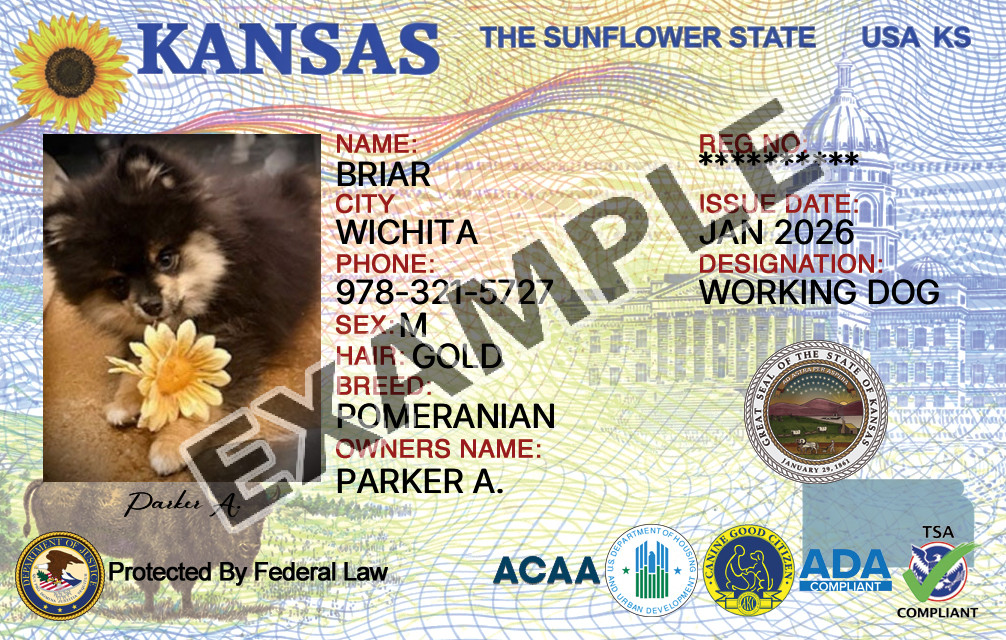
Service Dogs and Emotional Support Animals in Chase, Kansas
If you’re asking, “where do I register my dog in Chase County, Kansas for my service dog or emotional support dog?”—the key point is that there are usually two separate concepts involved: (1) local dog licensing (often handled by a city office if you live inside city limits) and (2) an animal’s legal status as a service dog or emotional support animal (ESA). In Chase County, Kansas, the right place to start depends on whether you live in an incorporated city (like Cottonwood Falls) or in an unincorporated area of the county.
- Dog licensing (rabies tag / city license) is typically a local requirement and may be managed by a city clerk or city hall if you live within city limits.
- There is no single universal federal registry for service dogs or emotional support animals in the United States.
- Even if your dog is a service dog or emotional support dog, you may still need to follow local dog license in Chase County, Kansas rules where applicable (including proof of rabies vaccination).
Where to Register or License Your Dog in Chase County, Kansas
The offices below are official local government contacts that serve Chase County residents for common licensing and municipal administration needs. If you live inside Cottonwood Falls city limits, City Hall (City Clerk’s Office) is a primary place to ask about where to register a dog in Chase County, Kansas for city tags or animal licensing requirements. If you are unsure which jurisdiction applies to your address, contact the Chase County Clerk for direction to the correct local office.
City of Cottonwood Falls — City Clerk / City Hall
Chase County Clerk / Election Officer
Overview of Dog Licensing in Chase County, Kansas
What “dog registration” usually means locally
In many Kansas communities, “registering” your dog means obtaining a local dog license (often a tag) and keeping rabies vaccination current. Local rules can be set by: a city ordinance (if you live in a city such as Cottonwood Falls) and/or county-level practices for unincorporated areas.
Why jurisdictions matter inside Chase County
Chase County includes incorporated cities and unincorporated areas. Your local dog licensing requirements may differ depending on:
- City limits: Some cities issue dog tags and set renewal dates and fees through the City Clerk or City Hall.
- Unincorporated county areas: Requirements may be handled differently; residents often contact county offices or local law enforcement/animal control for guidance.
- Proof standards: Many local licensing systems require proof of rabies vaccination, and sometimes additional records (spay/neuter proof or owner ID).
Service dog and ESA status is not the same as a dog license
Even if your dog is a service dog or emotional support dog, that does not automatically replace local licensing rules. In other words, service dog legal status and emotional support animal status are not the same thing as a dog license in Chase County, Kansas.
| Category | What it is | Who sets the rules | Common proof | Typical purpose |
|---|---|---|---|---|
| Dog License | A local license/tag for dogs (often annual), tied to the owner and vaccination status. | Usually city government (City Clerk/City Hall) and sometimes county practices for unincorporated areas. | Rabies vaccination certificate; sometimes owner ID, address confirmation, spay/neuter proof. | Helps communities track rabies compliance and identify owned animals; may support local animal services. |
| Service Dog | A dog individually trained to do work or perform tasks for a person with a disability. | Federal law (ADA) governs public access; state laws may add protections. No single federal registry. | Typically no government “registration.” Training and task performance are what matter legally; some handlers carry documentation for convenience, but it is not a universal requirement. | Disability-related assistance and access to public places where pets are not allowed. |
| Emotional Support Animal (ESA) | An animal that provides emotional support that alleviates symptoms of a condition; not trained for specific tasks like a service dog. | Commonly relevant in housing contexts (fair housing rules). Not the same as ADA service animal access. | Often a letter/documentation from a qualified healthcare provider for housing requests (as applicable). No universal government registry. | Support in housing settings where allowed; does not automatically grant access to public places as a service dog would. |
What You Need Before Registering a Dog
Common documents and information
When asking about dog licensing requirements Chase County, Kansas, most local offices will request some combination of the items below. Requirements can vary by municipality, so use this as a practical checklist and confirm with the correct office for your address.
- Proof of current rabies vaccination (often a rabies certificate from a licensed veterinarian)
- Your contact information (name, phone, address)
- Dog details (breed/description, age, color, sex)
- Spay/neuter documentation (if your local fee structure differs based on sterilization)
- Payment method for licensing fees (fees and renewal schedules are commonly set by local ordinance)
Rabies vaccination and local licensing
A common foundation of dog licensing programs is rabies control. Many local governments require proof that your dog is vaccinated against rabies before issuing a license/tag. If you recently moved to Chase County, Kansas or adopted a dog, plan to bring the most recent rabies paperwork when you contact the appropriate office.
Steps to Register or License a Dog in Chase County, Kansas
Step 1: Confirm your jurisdiction (city limits vs. county area)
To determine where to register a dog in Chase County, Kansas, first confirm whether your home is inside an incorporated city boundary. If you live in Cottonwood Falls city limits, start with the City Clerk/City Hall. If you are unsure, the Chase County Clerk can help you identify the correct local office.
Step 2: Gather rabies documentation and basic owner/dog details
Before calling or visiting, locate your dog’s rabies certificate and write down your dog’s identifying details (age, color, sex, and any microchip info if you have it). This speeds up the licensing process and helps ensure your record is accurate.
Step 3: Contact the correct office to ask about licensing procedures
Ask the office:
- Whether a dog license is required at your address
- What proof is required (rabies certificate, spay/neuter proof, ID)
- How fees are calculated (if applicable)
- Renewal timing (annual or other schedule)
- How you receive tags and what to do if a tag is lost
Step 4: Keep your records current
After you obtain a license/tag (if required), keep a copy of the rabies certificate and any receipt or licensing record in a safe place. If you move within Chase County or into/out of city limits, re-check requirements since jurisdiction can change the rules that apply.
Service Dog Laws in Chase County, Kansas
No single universal “service dog registration”
A frequent point of confusion is the idea that every service dog must be “registered” in a national database. In practice, service dog status is based on whether the dog is trained to perform disability-related tasks for its handler. A local dog license (if required) is separate from the dog’s legal status as a service animal.
How service dogs relate to local licensing
Even when a dog is a service dog, local rules may still require:
- Current rabies vaccination
- Compliance with local animal ordinances (leash rules, at-large rules, etc.)
- A city-issued dog license/tag if that municipality licenses dogs
Practical tip for calls to local offices
When you contact the local office, you can ask two separate questions:
- Licensing question: “Do you issue dog tags/licenses for residents at my address, and what documents do you need?”
- Status question: “Are there any local forms you require for service animals?” (Often the answer is “no,” but it is appropriate to ask for local procedures.)
Emotional Support Animal Rules in Chase County, Kansas
ESAs are not the same as service dogs
Emotional support animals (including emotional support dogs) provide support through companionship and comfort. Unlike service dogs, ESAs are not necessarily trained to perform specific tasks related to a disability. Because of that difference, ESA status does not typically grant the same public access rights that service dogs have.
What “registration” usually means for an ESA
For an ESA, “registration” commonly refers to keeping appropriate documentation for the specific context where it matters (often housing). It does not replace local animal licensing. If your city requires licensing, you still follow local rules for:
- Rabies vaccination proof
- Any local dog license/tag requirement
- Animal control and nuisance rules that apply to all dogs
If you need help finding the right local office
If you’re trying to sort out where do I register my dog in Chase County, Kansas for my service dog or emotional support dog, start by confirming your address jurisdiction. Then contact the appropriate local office in the “Where to Register or License Your Dog” section above.
Frequently Asked Questions
Do I need a dog license in Chase County, Kansas if my dog is a service dog?
Possibly. Service dog status does not automatically eliminate local dog licensing requirements. If your city (or local jurisdiction) requires a license/tag and proof of rabies vaccination, you generally still need to comply. Contact your city office (for example, Cottonwood Falls City Hall if you live there) for the exact local requirements.
Is there a federal registry for service dogs or emotional support animals?
No single universal federal registry exists for service dogs or emotional support animals. A dog license is a local government item, while service dog status is based on training and function, and ESA documentation is typically used in specific contexts (commonly housing).
What proof do I usually need to get a dog license?
Local offices commonly ask for:
- Rabies vaccination certificate
- Owner identification and address/residency information
- Dog details (description, age, sex)
- Spay/neuter proof if it affects fees
If I live outside Cottonwood Falls, where should I start?
Start by contacting the Chase County Clerk to confirm which local jurisdiction handles animal licensing or animal services for your address. In some areas, requirements can be municipal, and the right contact depends on whether you are inside a city boundary.
Do I need to renew a dog license every year?
Many communities issue dog tags/licenses on an annual basis, but renewal rules can vary. When you contact the licensing office, ask:
- When renewals are due
- Whether renewal requires an updated rabies certificate each time
- How to replace a lost tag
Register A Dog In Other Kansas Counties
Select your county below to get started with your dog’s ID card. Requirements and license designs may vary by county, so choose your location to see the correct options and complete your pup’s registration.
- Allen Dog License Cards
- Anderson Dog License Cards
- Atchison Dog License Cards
- Barber Dog License Cards
- Barton Dog License Cards
- Bourbon Dog License Cards
- Brown Dog License Cards
- Butler Dog License Cards
- Chautauqua Dog License Cards
- Cherokee Dog License Cards
- Cheyenne Dog License Cards
- Clark Dog License Cards
- Clay Dog License Cards
- Cloud Dog License Cards
- Coffey Dog License Cards
- Comanche Dog License Cards
- Cowley Dog License Cards
- Crawford Dog License Cards
- Decatur Dog License Cards
- Dickinson Dog License Cards
- Doniphan Dog License Cards
- Douglas Dog License Cards
- Edwards Dog License Cards
- Elk Dog License Cards
- Ellis Dog License Cards
- Ellsworth Dog License Cards
- Finney Dog License Cards
- Ford Dog License Cards
- Franklin Dog License Cards
- Geary Dog License Cards
- Gove Dog License Cards
- Graham Dog License Cards
- Grant Dog License Cards
- Gray Dog License Cards
- Greeley Dog License Cards
- Greenwood Dog License Cards
- Hamilton Dog License Cards
- Harper Dog License Cards
- Harvey Dog License Cards
- Haskell Dog License Cards
- Hodgeman Dog License Cards
- Jackson Dog License Cards
- Jefferson Dog License Cards
- Jewell Dog License Cards
- Johnson Dog License Cards
- Kearny Dog License Cards
- Kingman Dog License Cards
- Kiowa Dog License Cards
- Labette Dog License Cards
- Lane Dog License Cards
- Leavenworth Dog License Cards
- Lincoln Dog License Cards
- Linn Dog License Cards
- Logan Dog License Cards
- Lyon Dog License Cards
- Marion Dog License Cards
- Marshall Dog License Cards
- McPherson Dog License Cards
- Meade Dog License Cards
- Miami Dog License Cards
- Mitchell Dog License Cards
- Montgomery Dog License Cards
- Morris Dog License Cards
- Morton Dog License Cards
- Nemaha Dog License Cards
- Neosho Dog License Cards
- Ness Dog License Cards
- Norton Dog License Cards
- Osage Dog License Cards
- Osborne Dog License Cards
- Ottawa Dog License Cards
- Pawnee Dog License Cards
- Phillips Dog License Cards
- Pottawatomie Dog License Cards
- Pratt Dog License Cards
- Rawlins Dog License Cards
- Reno Dog License Cards
- Republic Dog License Cards
- Rice Dog License Cards
- Riley Dog License Cards
- Rooks Dog License Cards
- Rush Dog License Cards
- Russell Dog License Cards
- Saline Dog License Cards
- Scott Dog License Cards
- Sedgwick Dog License Cards
- Seward Dog License Cards
- Shawnee Dog License Cards
- Sheridan Dog License Cards
- Sherman Dog License Cards
- Smith Dog License Cards
- Stafford Dog License Cards
- Stanton Dog License Cards
- Stevens Dog License Cards
- Sumner Dog License Cards
- Thomas Dog License Cards
- Trego Dog License Cards
- Wabunsee Dog License Cards
- Wallace Dog License Cards
- Washington Dog License Cards
- Wichita Dog License Cards
- Wilson Dog License Cards
- Woodson Dog License Cards
- Wyandotte Dog License Cards
